If your lifestyle involves a lot of sitting each day, regular movement and changes of position can help you stay comfortable and support your general health. Despite commonly held beliefs, there is no single “correct” posture that everyone must hold.
Edward Durrant, MSK physiotherapist and clinical case manager at AXA Health, looks at five exercises to help keep your back healthy.
A modern problem
Modern life doesn't lend itself to having a healthy back. For many of us, long hours sitting all day at a desk or on the road can take its toll, add to this a whole host of other sedentary behaviours like TV viewing, sitting at a computer or gaming, and it's no wonder that our bodies can start to feel the strain.
With many adults in the UK spending around 9 hours each day sitting1, it may come as no surprise that almost one third of the population in the UK have an MSK condition such as arthritis or back pain.2
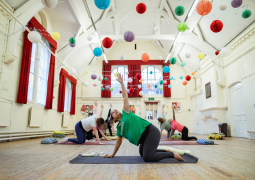
Bothersome back or painful joints?
If you're a member, you can get the support you need with a video or phone appointment with a physiotherapist or specialist, without a GP referral. Available for our members aged 18 and over.
Keeping your posture in check
Reassuringly there is no strong evidence to suggest that there is a “best” posture for us to adopt while sitting, or that avoiding “correct” postures can lead to back pain.3
The key is to move around and change position regularly. HSE advises breaking up prolonged display-screen work with changes of activity; short, frequent breaks are generally preferable to longer, infrequent ones.4
The phrase that is used in more recent times is; ‘your best posture is your next posture’, signifying that our backs, like all joints in our body, want to be moved.
Staying active for your whole health
Research has shown that sitting still for too long – day in, day out – is linked to being overweight or obese, type 2 diabetes, some types of cancer.5
Sitting for long periods is also thought to increase your risk of developing dying prematurely from cardiovascular disease.6
Add it all up and, if your lifestyle involves a lot of sitting, it's vital you take care of yourself. Studies have also shown strong evidence that a lower step count is linked to higher risk of all-cause mortality.7
Some useful tips to help you break up the amount of time you spend sitting each day include:
- standing if you take a train or bus,
- taking the stairs and walking up escalators, instead of using a lift,
- setting a reminder to get up every 30 minutes,
- height adjustable desks, that allow you to stand while you are working can also help, but do try and avoid standing all day,
- standing and doing some stretches by your desk or walking around while you're on the phone,
- taking a walking break every time you have a coffee or tea break,
- walking to a co-worker's desk, if you can, instead of emailing or calling them,
- walk and talk meetings – whether they’re in person or virtual,
- swapping some TV time for more active hobbies.
5 effective exercises for back pain
Here are some great lower back and core exercises that a physiotherapist might recommend to help those with non-specific back discomfort. They can help you move comfortably and build strength but aren’t a substitution for getting an individual assessment.
Choose movements that feel comfortable, start gently and don’t push through worsening pain.
1. Lumbar extension station
This would require a lumbar extension station. They vary in price but can be bought to use at home, though are also commonly found in gyms.
They involved isolating the legs and leaning forward and using the lumbar extensors (your lower back muscles) to lift you back up. You can put your arms overhead to make it harder or even hold a weight plate to your chest if you can manage that.
If you don’t have access to a lumbar extension station – the superman – below – is a great no-equipment-needed alternative.
2. Superman
This improves lower back strength by isolating the lumbar extensor muscles and taking the load away from the glutes and hamstrings which often take over in other exercises that aim to target the lower back. The superman has lots of variations to appropriately challenge the individual.
Level 1: Torso-only lifts: Lie face down with your forehead resting on your hands or have your arms by your sides. Lift only your chest a few inches off the floor to focus on the lower back muscles lifting you up, aim to hold for 2-3 seconds at the top.
Level 2: Alternating arm/leg lifts: This exercise starts the same as the above but this time you will have one arm reaching out in front of you and then you lift your chest off the floor. The acts as a longer lever, making it harder for the lower back muscles. You can either complete one set and swap arms, or alternate arms on every repetition.
Level 3: Progressing the arm / leg lifts: You can make this even more challenging again by doing two arms at the same time or doing opposing arms and legs at the same time. For example, reaching out with the right arm and lifting your chest up off the floor whilst at the same time, lifting the front of the left leg away from the floor.
3. Knee to chest
Lie on your back and clasp your hands around one knee, pulling it towards your chest. Leave the other leg flat and hold the movement for 10 seconds. Then change legs.
Tips: Do this lower back exercise slowly and with control. You can also pull both knees towards your chest at the same time and hold for 30 seconds.
4. Lumbar rotation crook lying
Active movement of the lower back (rotation) by lying on your back, knees bent and feet on the bed or floor. Slowly roll your knees from one side to the other.
Tip: Roll the knees from side to side slowly and with control.
5. Bird dog
This exercise helps you strengthen your core stability, shoulder and buttock muscles. It involves four-point kneeling with lifting your opposite arm and leg.
Tips: Your lower back should remain in a neutral position (neither arched or rounded) throughout. A straight line should form from your ankle to hip and hand and shoulder. Hold this position as steady as possible while maintaining a normal breathing pattern.
If you suffer with back pain, or any other issue affecting your muscles, bones and joints that doesn’t seem to be getting better, or actually gets worse over time, it’s worth contacting your GP to find out the cause (if unknown) and what treatment may be available to aid recovery.
References
- How long do adults spend sitting down? – NHS
- Musculoskeletal Health – NHS
- No consensus on causality of spine postures or physical exposure and low back pain – National Library of Medicine
- Working safely with display screen equipment: work routine and breaks – Health and Safety Executive
- Why we should sit less – National Library of Medicine
- Office workers fear sitting too long could be impacting their health – British Heart Foundation
- Daily steps and all-cause mortality: a meta-analysis of 15 international cohorts – The Lancet