
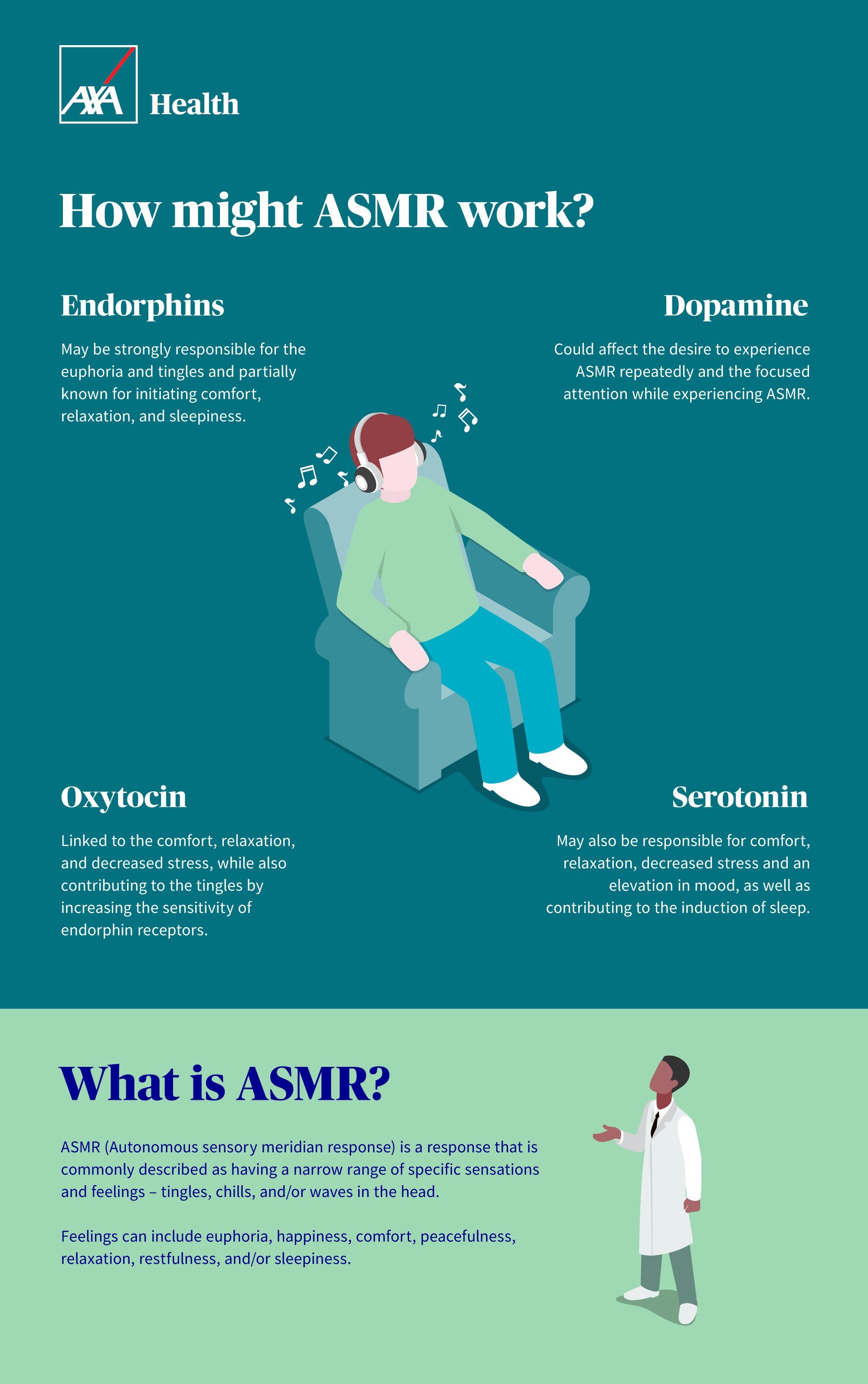
ASMR (Autonomous sensory meridian response) is a form of self-care where sounds are created that stimulate a warm, tingly sensation in some people, bringing about a sense of calm. Videos or playlists include the sounds of whispering, crinkling, tapping or scratching, people painstakingly folding towels or taking things out of boxes.
Although it may initially seem odd, ASMR is incredibly popular, with videos frequently getting millions of views.
The 'tingles', sometimes described as 'brain tingles' usually start at the crown of the head and spread down through the head, back and limbs, typically generating feelings of intense calm and relaxation, which can induce sleep and help mental wellbeing.

Explore our sleep hub
Read our top tips on how to get a good night’s sleep and how to feel refreshed when you wake up. We also explore common sleep conditions and dispel some sleep myths.
What are the health benefits of ASMR?
The deeply relaxing effect that ASMR can have on those who experience the phenomenon, makes it a useful life tool for the relief of stress, low mood, chronic pain and insomnia.
A 2018 study into the physiological effects of ASMR1 shows that watching the videos not only produces feelings of relaxation but also accompanying changes in the body, such as a significant decrease in heart rate.
Individuals who experience ASMR also frequently reported higher levels of excitement, calmness and social connectedness, as well as lower levels of stress and sadness.
Researchers concluded that ASMR triggered by the videos really does have a measurable effect on the body, with the hope that ASMR can be used as an aid to health.
Are there any downsides to ASMR?
We're not aware of any downsides but it's worth noting that not everyone can experience ASMR: the ability to respond to such triggering stimuli differs from one person to the next and some individuals find the videos unhelpful and non-stimulating.
Alternatives to ASMR to aid relaxation and sleep
If ASMR videos don’t do it for you, fear not! There are plenty of tips and techniques you can try to de-stress, improve your mood or help you get a better night’s sleep and you’ll find lots of them within our Staying Healthy pages.
For instance, take a look at our sleep hub for suggestions on how to improve the quantity and quality of sleep you’re getting.
References
- More than a feeling: Autonomous sensory meridian response (ASMR) - PLOS One