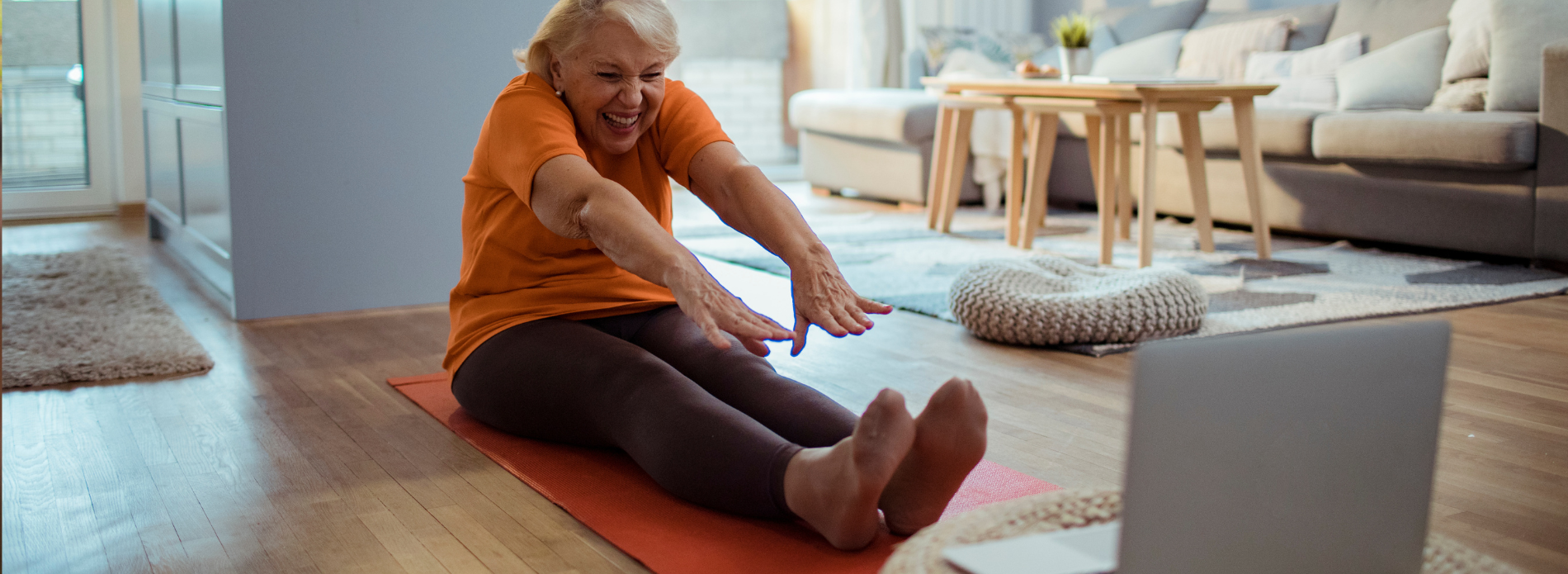
Almost all of us are more sedentary than we should be. Even if you don’t have a desk job, chances are you spend hours sitting – in the car, on trains, or at home. And sedentary lifestyles have been linked with a number of health issues1, not least of all back pain.
Recent research conducted by Hussle, in collaboration with YouGov, revealed that over two thirds (70%) of working individuals say their job leads to more sedentary behaviour.2 Employees are recognising the consequences too, with 52% of those surveyed saying their job is already harming their physical health.
So, to help your back cope with modern life, we’re sharing our top back-friendly exercises and simple workout routines to help stretch, strengthen, and keep your back healthy.

Flexible multi-gym membership with Hussle
AXA Health members can get up to 40% off Hussle's Monthly+ pass for anyone covered on their AXA Health private healthcare membership, with no sign-up fee and no annual contract. With access to multiple gyms from a network of 1,500+ gyms, pools and spas. Terms apply.
Don’t avoid exercise if your back hurts
Back pain can be debilitating, but experts tell us that you need to keep moving (within reason). It’s counter-intuitive, but exercising your back is key to reducing back pain and avoiding it in future.
Type of exercise matters, of course. High-impact activities such as:
- skipping,
- jumping,
- plyometrics (for example burpees, squat jumps, and box jumps),
- sometimes even running
can compress the lower back, so these are best avoided. Especially if you have issues around the lumbar spine, sacroiliac joint, or pelvis.
It’s also crucial to note that some strength exercises (heavy overhead presses or back squats) might make mid-back stiffness worse.
But low-impact cardio:
- flowing yoga movements,
- and seated or supported strength training
is a great way to keep yourself moving, encourage blood flow, and keep your spirits up whilst you’re dealing with back pain.
What equipment should I use for back-friendly workouts?
When experiencing back pain, it is important to start with supported cardio (bike and swimming) and supported strength training (gym machines and cable exercises).
If you begin to find some reprieve, you may start gradually building up to multi-plane exercises, such as kettlebell exercises, and functional movements. However, be cautious and seek guidance from a trained professional if you’re unsure.
While it’s good to avoid movements that aggravate the issue, ideally, we want to build up to a place where we are no longer limited in certain movements, due to the pain.
Which exercises should I avoid for back pain?
Lower back
If your lower back and hips hurt, this suggests issues with your lumbar spine. Take a break from heavily loaded hinges (like heavy deadlifts) and focus on re-educating your body to hinge correctly using just your bodyweight.
This may include strengthening exercises like glute bridges, gentle twists, and single leg work (step-ups and split squats), if they feel ok.
Mid-back
If your mid-back is stiff, this suggests issues with your thoracic spine (middle section of the spine). When this is the case, it is sensible to avoid heavy, overhead loading or barbell activities.
Instead, try twists like thread the needle and pulling exercises like cable rows, that will mobilise the shoulder blades.
As with the lower back, the goal here is to work on improving your thoracic mobility, so that it can eventually get back to healthy overhead reaching when the time is right.
It’s important to seek expert guidance from a medical professional or a personal trainer to be sure you are doing exercises for your particular back issues. Back pain is highly nuanced because everyone’s biomechanics and daily habits are different. The exact root cause (and therefore the best rehabilitation) for one person may look completely different for another.
5 exercises to strengthen your back
Strengthen your back to ward off aches and pains with these simple, bodyweight, back exercises that you can do anywhere.
1) I/Y/T
- Lie on your front, both arms stretched forward. Keeping your chest on the floor, raise both arms up and down 10 times (like the letter I).
- Move your arms out to form a letter Y and repeat the 10 reps.
- Move your arms out to form a letter T and do another 10.
Keep the movement small and controlled.
2) Scapula push up
Get into a press up position on feet or knees and, keeping your arms straight, press up and down through your shoulder blades only.
3) Glute bridges
Lie on your back, feet on the floor close to your body. Press through both feet, engaging your glutes, to lift your hips. Hold this position, then lower slowly.
4) Bird dog
On hands and knees, take your left hand forward and right foot back to form a straight line. Bring them back to the start position, repeat with the other side.
5) Dead bugs
- Lie on your back, arms straight and knees bent (in an upside-down table top position).
- Take your left arm straight back behind you and your right leg straight out in front, keeping the opposite arm and leg in place.
- Repeat on the other side.
Best yoga poses for back pain
Yoga is also an effective tool to help reduce back pain, as it gently stretches and strengthens the muscles supporting the spine, particularly the core, back and glutes.
Here are some simple yoga exercises that you can try in the comfort of your own home:
- Supine twists – on your back, taking your bent legs to one side then the other.
- Thread the needle – on hands and knees, taking one arm underneath the body to twist through the upper back.
- Puppy pose – from hands and knees, walking the hands forward to create a back bend.
- Child’s pose – sitting back on or near your heels, with hands outstretched and chest towards the floor.
- Sphinx pose – lying on your front, forearms on the floor with elbows underneath shoulders to create an upper back bend.
>Read more about yoga in our facts and fiction article
What gym classes could help with back issues?
If you prefer exercising with others, try yoga, Pilates (mat or Reformer style), spin, or dance-style classes to keep your back moving freely.
Avoid HIIT classes with high-impact exercises, and fast-paced cardio where you may not have time to check your alignment.
Don’t be tempted to give up on exercise because of back pain – moving is the best thing you can do.
Work with a personal trainer or ask for guidance in the gym to make sure you’re doing exercises that will help strengthen and support your back.
Discover more exercise and fitness topics in our fitness hub
References
- Why we should sit less – NHS
- Work routines are contributing to sedentary lifestyles in 70% of UK workers – Employee benefits