Functional fitness training is a way of exercising that helps your body move better in everyday life. It focuses on building strength, flexibility, balance and coordination so you can do daily activities (like lifting, bending, walking the dog, or climbing stairs) more safely and comfortably – and keep doing those things for a long time!
Instead of training certain groups of muscles in isolation, functional fitness works your whole body using movements that reflect real life. The goal of functional fitness isn’t just to get fitter in the gym, but to feel stronger and more confident outside it too.
How does functional fitness work?
Functional fitness describes any kind of exercise that uses natural movement patterns. These include:
- Squatting – sitting down, standing up, lifting things off the floor
- Pushing – opening doors, pushing prams, pushing ourselves up
- Pulling – lifting bags, opening heavy doors, pulling yourself upright
- Hinging – bending to pick things up or reaching down to the ground
- Rotating – turning, reaching, changing direction, walking the dog
- Balancing – walking on uneven ground, climbing stairs
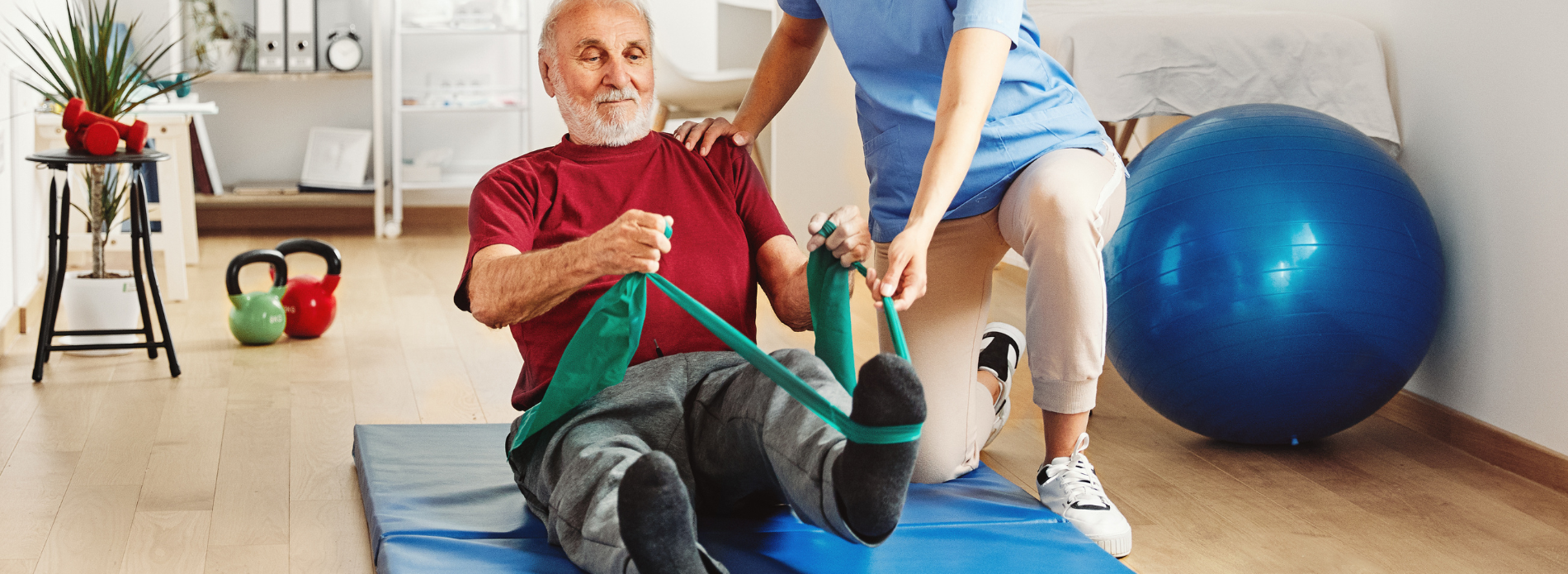
Functional fitness exercises are often done using just your bodyweight, perhaps with simple equipment like resistance bands, kettlebells or other free weights rather than gym machines.
Movements can always be adapted to suit your fitness level, ability and goals.
What are the benefits of functional fitness training?
Functional fitness isn’t about training for a specific sport or the way you look. It’s all about supporting long-term health and strength, so you can keep doing the things that are important to you.
- Stronger for daily life – Functional fitness builds useful strength that translates to real-world tasks.
- Balance and coordination – Functional exercises work your stability and control to keep you steady on your feet.
- Mobility and flexibility – Training through your full, natural range of motion helps joints move more freely.
- Reduced risk of injury – Functional fitness improves strength and movement quality to reduce risk of injury.
- Confidence in how your body moves – Feeling physically capable boosts confidence, independence and wellbeing.
What does a functional fitness workout look like?
Functional fitness workouts can be short or longer, gentle or more challenging. What matters is that the movements are controlled, purposeful and suited to your lifestyle.
A functional fitness session might include:
- Squats or sit-to-stand exercises.
- Lunges or step-ups.
- Push-ups or chest presses.
- Rows or pulling movements.
- Core stability and balance work.
- Light cardio like walking, cycling or rowing.
- More advanced workouts could include jumps or plyometrics to train reaction times – a key factor in ageing with confidence.
How much exercise should I being doing a week?
The NHS advise adults aged 19 to 64 years old, to undertake:
- at least 150 minutes of moderate intensity activity a week,
- or 75 minutes of vigorous intensity activity a week,
- spread evenly over 4 to 5 days a week, or every day.1
Adults aged 65 and over should aim:
- to be physically active every day, even if it's just light activity,
- to do activities that improve strength, balance and flexibility on at least 2 days a week,
- to do at least 150 minutes of moderate intensity activity a week or 75 minutes of vigorous intensity activity if you are already active, or a combination of both.1
Moderate exercise can include activities such as walking, cycling, hiking and dancing. Whereas vigorous exercise includes running, aerobics, swimming and more intense versions of cycling and dancing.
For older adults, strength training is also recommended and includes yoga, lifting weights, working with resistance bands and exercises such as push-ups and sit-ups.2
Many of these activities fall into the category of functional fitness, so by building them into your exercise routine you’re able to get the benefits of functional fitness and meet the weekly recommendations.
Functional fitness for older adults
We’ve all heard the phrase “use it or lose it”. Functional fitness keeps us “using it” and is especially valuable as we get older. This style of working develops reaction times, proprioception (awareness of your body’s position in space), strength, balance and mobility – all things that support independence and confidence in everyday life.
For older adults, functional training could be adapted to focus on:
- improving balance,
- maintaining muscle strength and building bone density,
- supporting joint mobility and posture,
- and building confidence in movements.
You don’t need to do lots of lengthy workouts every week. Even small regular amounts of functional training can help have a positive impact on your quality of life.
Is functional fitness suitable for everyone?
Yes, functional fitness is one of the most adaptable styles of training and can be scaled up or down depending on age, fitness levels, health conditions, previous injuries and personal goals.
Functional fitness can be shaped around you, whether you’re new to exercise, returning after a break or wanting to move better.
How to get started with functional fitness
If functional fitness sounds interesting, here’s how to get started:
- Choose exercises that feel relevant to your daily life.
- Consider functional fitness group classes.
- Or look for a gym that offers functional training.
- Ask a personal trainer to show you good technique.
- Focus on short, regular sessions to build consistency.
For more information and ideas on how to stay strong and healthy to support your lifestyle, visit our exercise and fitness hub.
References